
Bangladesh is one of the few countries in South Asia, which remains to be explored. Bangladesh has a delicate and distinctive attraction of its own to offer and it is definitely not a tourist haunt like Nepal or India. Bangladesh is like a painter's dream come true with a rich tapestry of colors and texture. The traditional emphasis of the tourist trade has always been on the material facilities offered by a country rather than on its actual charms. This may be a reason why Bangladesh has seldom been highlighted in the World's tourist maps.
It's a land of enormous beauty, hundreds of serpentine rivers, crystal clear water lakes surrounded by ever green hills, luxuriant tropical rain forests, beautiful cascades of green tea gardens, world's largest mangrove forest preserved as World Heritage, home of the Royal Bengal Tiger and the wild lives, warbling of birds in green trees, wind in the paddy fields, abundance of sunshine, world's longest natural sea beach, rich cultural heritage, relics of ancient Buddhist civilizations and colorful tribal lives, - Bangladesh creates an unforgettable impression of a land of peace.
You'll appreciate our culture and the environment. These are not simply sight-seeing excursions, but real-time learning experiences. Enjoy an ideal blend of adventure and exploration with comfort and relaxation. Here you find that you are not alone. With us, any place in Bangladesh is a home away from home.
is one of the few countries in South Asia, which remains to be explored. Bangladesh has a delicate and distinctive attraction of its own to offer and it is definitely not a tourist haunt like Nepal or India. Bangladesh is like a painter's dream come true with a rich tapestry of colors and texture. The traditional emphasis of the tourist trade has always been on the material facilities offered by a country rather than on its actual charms. This may be a reason why Bangladesh has seldom been highlighted in the World's tourist maps.It's a land of enormous beauty, hundreds of serpentine rivers, crystal clear water lakes surrounded by ever green hills, luxuriant tropical rain forests, beautiful cascades of green tea gardens, world's largest mangrove forest preserved as World Heritage, home of the Royal Bengal Tiger
and the wild lives, warbling of birds in green trees, wind in the paddy fields, abundance of sunshine, world's longest natural sea beach, rich cultural heritage, relics of ancient Buddhist civilizations and colorful tribal lives, - Bangladesh creates an unforgettable impression of a land of peace.You'll appreciate our culture and the environment. These are not simply sight-seeing excursions, but real-time learning experiences. Enjoy an ideal blend of adventure and exploration with comfort and relaxation. Here you find that you are not alone. With us, any place in Bangladesh is a home away from home.
There are six division .Let see them
DHAKA DIVISION


Dhaka division is located at center of the country has an area of 31119 sq. km and a population of 38.678 million. It has 17 districts and 64 municipalities. Main rivers of this division are padma, jamuna, meghna, old brahmaputra, dhaleshwari, shitalakshya, brahmaputra, buriganga, arial khan. Madhupur and Bhawal Garhs are located to the northern parts of Dhaka, in Gazipur, southern part of Mymensingh and eastern part of Tangail districts; Garo hills are located in Mymensingh district. Dhaka (Capital City)
 stands on the bank of the river Buriganga.
Main Tourist Spots In Dhaka Division:
Inside Dhaka City: Ahsan Manjil - Lalbag Fort - National Museum - Bangabandhu Memorial - Mukti Juddha Museum - Science Museum - Shadhinota Stambha - National Poet's Graveyard - Suhrawardy Uddyan - National Leader Mausoleum - Banga-Bhaban -Ramna Park - Parliament House - Arts & Crafts Institute - Curzon Hall - Old High Court -1857 Memorial - National Zoo - Botanical Garden - Baldha Garden - Star Mosque - Baitul Mukarram Mosque - Mosques - Hindu Temples - Churches
Outside Dhaka City: Mosque Of Baba Adam - Sonargaon - National Martyrs Memorial -Bhawal National Park - Jamuna Bridge - Tungipara - Modhupur Picnic Spot - Susang Durgapur - Gajni Parjatan Center
Chittagong Division


Chittagong Division is located at southern part of the country has an area of 33771 sq. km and a population of 23.99. It has 11 districts and 38 municipalities.
Chittagong is the biggest seaport and second largest town in Bangladesh situated near the Bay of Bengal. It is 264 km away east of Dhaka, famous for hill areas, natural beauty and for the seashore. Chittagong is also known of the town of Aulias (Muslim saints).
The Shahi Jama-e-Masjid and Qadam Mubarak Mosque are two of the most impressive buildings in the city. It is also worth visiting the Ethnological Museum in the Modern City, which has interesting displays on Bangladesh's tribal peoples . There are good views and cooling breezes from Fairy Hill in the British City in the northwestern sector of the city.
Chittagong is the country's chief port and is the main site for the establishment of heavy, medium and light industries. Bangladesh's only steel mill and oil refinery are also located in Chittagong.
Main Tourist Spots in Chittagong Division :. There are good views and cooling breezes from Fairy Hill in the British City in the northwestern sector of the city.Chittagong is the country's chief port and is the main site for the establishment of heavy, medium and light industries. Bangladesh's only steel mill and oil refinery are also located in Chittagong.
Inside Chittagong City: War Cemetery - Zia memorial Museum - Ethnological Museum -Court Building Museum - Shrine's - Fays Lake - Patenga & Fouzdarhat - Port Area
Outside Chittagong City: Sitakundu - Parki Beach - Chandraghona - Cox's Bazar -Himchori & Inani Beach - Moheshkhali Island - Sonadia Island - St. Martins Island -Nijhum Island - Aggameda Khyang - Ramu - Teknaf - Comilla - BARD
 - Lalmai & Moinamoti - Hill tracks >> Rangamati - Khagrachari - Bandarban
Khulna Division


Khulna division is in the southwest part of Bangladesh has an area of 22274 sq. km and a population of 14.47 million. There are 10 districts and 28 municipalities under Khulna. It has the world's biggest mangrove forest, the Sundarbans. In Khulna town you can visit Khulna Museum and Zoo.
Main tourist spots in Khulna division:

Sundarban is the world biggest mangrove forest. In Bangladesh tourism, Sundarban plays the most vital role. A large number of foreigners come to Bangladesh every year only to visit this unique mangrove forest. Besides, local tourists also go to visit Sundarban every year. The area of great Sundarban is approximately 6000 sq. km.
General Information about Sudarban:
AREA: Nearly 2400 sq. miles or 6000 sq. km.
FOREST LIMITS: North-Bagerhat, Khulna and Sathkira districts : South-Bay of Bengal; East-Baleswar (or Haringhata) river, Perojpur, Barisal district, and West-Raimangal and Hariabhanga rivers which partially form Bangladesh boundary with West Bengal in India.
MAIN ATTRACTIONS: Wildlife photography including photography of the famous Royal Bengal Tiger, wildlife viewing, boating inside the forest will call recordings, nature study, meeting fishermen, wood-cutters and honey-collectors, peace and tranquility in the wilderness, seeing the world's largest mangrove forest and the revering beauty.
 swamps though; they include some of the last remaining stands of the mighty jungles, which once covered the Gangetic plain.The Sundarbans cover an area of 38,500 sq km, of which about one-third is covered in water.Since 1966 the Sundarbans have been a wildlife sanctuary, and it is estimated that there are now 400 Royal Bengal tigers and about 30,000 spotted deer in the area.
Sundarbans is home to many different species of birds, mammals, insects, reptiles and fishes. Over 120 species of fish and over 260 species of birdshave been recorded in the Sundarbans. The Gangetic River Dolphin (Platanista gangeticus) is common in the rivers. No less than 50 species of reptiles and eight species of amphibians are known to occur. The Sundarbans now support the only population of the Estuarine, or Salt-Water Crocodile including photography of the famous Royal Bengal Tiger, wildlife viewing, boating inside the forest will call recordings, nature study, meeting fishermen, wood-cutters and honey-collectors, peace and tranquility in the wilderness, seeing the world's largest mangrove forest and the revering beauty. swamps though; they include some of the last remaining stands of the mighty jungles, which once covered the Gangetic plain.The Sundarbans cover an area of 38,500 sq km, of which about one-third is covered in water.Since 1966 the Sundarbans have been a wildlife sanctuary, and it is estimated that there are now 400 Royal Bengal tigers and about 30,000 spotted deer in the area. (Crocodiles paresis) in Bangladesh, and that population is estimated at less than two hundred individuals
Here land and water meet in many novel fashions, Wildlife presents many a spectacle. No wonder, you may come across a Royal Bengal Tiger swimming across the streams or the crocodiles basking on the riverbanks. , crocodiles, jungle fowl
 , wild boar, lizards, theses monkey and an innumerable variety of beautiful birds. Migratory flock of Siberian ducks flying over thousands of sail boats loaded with timber, golpatta (round-leaf), fuel wood, honey, shell and fish further add to the serene natural beauty of the Sundarbans. This is indeed a land for the sportsmen, the anglers and the photographers with its abundance of game, big and small, crocodile, wild boar, deer, pythons, wild-birds and above all the Royal Bengal Tiger, cunning, ruthless and yet majestic and graceful, For the less adventurously inclined, there are ducks and snipes, herons and coots, yellow-lags and sandpipers. It is also the land for the ordinary holiday makers who desire to rest or wander around at will to refresh their mind and feast their eyes with the rich treasure that nature has so fondly bestowed.
, crocodiles, jungle fowl, wild boar, lizards, theses monkey and an innumerable variety of beautiful birds. Migratory flock of Siberian ducks flying over thousands of sail boats loaded with timber, golpatta (round-leaf), fuel wood, honey, shell and fish further add to the serene natural beauty of the Sundarbans. This is indeed a land for the sportsmen, the anglers and the photographers with its abundance of game, big and small, crocodile, wild boar, deer, pythons, wild-birds and above all the Royal Bengal Tiger, cunning, ruthless and yet majestic and graceful, For the less adventurously inclined, there are ducks and snipes, herons and coots, yellow-lags and sandpipers. It is also the land for the ordinary holiday makers who desire to rest or wander around at will to refresh their mind and feast their eyes with the rich treasure that nature has so fondly bestowed.Means of Communication: Water transport is the only means of communication for visiting the Sundarbans from Khulna or Mongla Port. Private motor launch, speedboats, country boats as well as mechanized vessel of Mongla Port Authority might be hired for the purpose. From Dhaka visitors may travel by air, road or rocket steamer to Khulna - the gateway to the Sundarbans. Most pleasant journey from Dhaka to Khulna is by Paddle Steamer , Rocket presenting a picturesque panorama of rural Bangladesh. Day and nightlong coach services by road are also available. The quickest mode is by air from Dhaka to Jessore and then to Khulna by road.
Journey time: It varies depending on tides against or in favor in the river. Usually it takes 6 to 10 hours journey by motor vessel from Mongla to Hiron Point or Katka.
FAMOUS SPOTS: The main tourist spots in Sundarban are Karamjol, Katka, Kochikhali, Hiron point and Mandarbaria. Hiron Point (Nilkamal) for tiger, deer, monkey, crocodiles, birds and natural beauty. Katka for deer, tiger, crocodiles, varieties of birds and monkey, morning and evening symphony of wild fowls. Vast expanse of grassy meadows running from Katka to Kachikhali (Tiger Point) provides opportunities for wild tracking.
Tin Kona Island for tiger and deer.
Tin Kona Island for tiger and deer.
:: Dublar Char (Island) for fishermen. It is a beautiful island where herds of spotted deer are often seen to graze.
Katka is one of Heritage sites in Sunderban. In Katka there is a wooden watching tower of 40 ft. high from where you can enjoy the scenic beauty of Sunderban. A beautiful sea beach is there is Katka; you will enjoy while you are walking to go the beach from the watching tower. Verities birds are visible in Katka.Hiran point
This is another tourist spot in Sunderban. It is called the world heritage state. You can enjoy the beauty of wild nature and dotted dears walking and running in Hiron point.
There are also two other Heritage side in Sunderban; one is Kochikhali and the other is Mandarbaria where you will find dears and birds. If you are lucky you can see the Great Royal Bengal Tiger, but for sure you can at least see the stepping of Great Royal Bengal Tiger here and there in these spots.
Karamjol is a forest station for the Rangers. Here you can see a dear breeding center. To visit Sunderban you need to go there with a guide and it is even better if you go there with a group. You can stay two/three days in Sunderban depending on your desire and requirements. One-day tour is not enough for Sundarban as you will not be able to see the nature in haste. For one-day tour you can go up to Karamjol and at a glance visit the outer portion of Sunderban forest areas.
Crocodiles, Snakes and if you are lucky person you will be able to see the greatest mystery of Sunderban –The Royal Bengal Tiger. Sunderban is one of main sources to collect pure honey. You should not forget to buy some pure honey. Another inexpressible and unforgettable beauty you can enjoy if you can match your timing of tour in full moon. In the full moon the nights in Sunderban could be one of the most memorable nights for your whole life.
Other necessary Information about Sundarban Tour:
Entry Permission: Prior permission must be obtained through written application from the Divisional Forest Office, Circuit House Road, Khulna (Phone 20665, 211731) to visit the Sundarbans. Required entrance fees for visitors, vessel or boat payable at the relevant forest station/range office.
Fee for Commercial Photography:
Movie Tk. 5,000.00 per role exposed
Video Tk. 4,000.00 per Cassette
Still Tk. 1,000.00 per role exposed
Movie Tk. 5,000.00 per role exposed
Video Tk. 4,000.00 per Cassette
Still Tk. 1,000.00 per role exposed
Guided Tours : To feel the beauty of Sunderban you will have to go inside Sunderban & visit at least the most common tourist spots of Sunderban, specially the four-heritage side of Katka, Hiron point, Mandarbaria & Kachikhali. It will require minimum two nights stay in Sunderban to visit these spots and if you are in a group you can ask your tour operator to make it three, four or five night tour package as per your desire ness to invent the real beauty of Sunderban in your Package tour program. In Sunderban visit, all the way you will have to go by tourist launch and spend your night also in the launch as no hotel or motel facilities are available there inside of Sunderban. In this tour your foods and water will be supplied from the tourist launch only. So to visit the great Sundarban you will have to decide in advance how many days you want to spent in Sunderban – accordingly your tour operator will arrange and preserve year foods and water. Tour operators offers all-inclusive guided package fours from Dhaka to Sundarbans and return during the tourist season (October to March).
 Climate: Climate in the Sundarbans is moderate. Air is humid. Full monsoon is from June to September. The annual rainfall average between 65" and 70". During ebb tide the forest becomes bare by 6-7 feet and at high tide (30 miles and hour) the entire territory of the forest floats on water.
Life in Forest: Only means of transportation inside the forest is boat. There is no road, no trail of a path anywhere. The woodcutters make temporary dwellings at the edge of the forest at a height of 8-10 feet for fear of wild animals others live on boats. In the chandpai region it is fascinating to see the nomadic fishermen (living with families on boats) catching fish with the help of trained offers. Exciting activities take place in Dublar Char in the forest where fishermen from Chittagong gather for four months (mid Oct. to mid Feb.) to catch and dry fish. But the most daring and exciting of all activities is presented by the honey-collectors who work in groups for just two months (April-May) and it is interesting to see how they locate a hive and then collect honey.
Flora and Fauna: The Sundarbans is endowed by nature with rich flora and fauna. It is a wonderful place to see or to shoot a Royal Bengal Tiger with Camera if one has the time to wait in the forest. There are a good number of tigers in the Sundarbans. Lovely spotted deer are easy to find. Besides there are a wide variety of wildlife for which the Sundarbans is so famous.
Visit to the Forest: Permission from the Division Forest Officer, Khulna is required to visit to the forest. Cholera vaccine is to be taken well in advance. Anti-malarial, anti-diarrhoeal, insect repellent cream, drinking water, green coconuts, medical kit, light tropical dress, thick rubber soled boots etc. are to be carried with the tourist. It will be wise to take the help of an experienced guide to make the journey fruitful.
Tourist season & Shooting: Best time to visit the Sundarbans is from November to March. Exciting honey collection season is during April-May. Hunting is prohibited by law in the country for the preservation of wildlife. Certain species of birds, however, can be shot with prior permission of the Divisional Forest Officer, Khulna.
N.B: Special notes to the tourist to remember again - do not go in side of the forest without your guide and proper securities while your are in Sunderban.


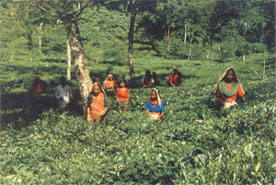

Sylhet division occupies the north east part of Bangladesh, has an area of 12596 sq. km and a population of 7.899 million. There are 4 districts and 14 municipalities under Barisal. It is a natural hilly, forest area with ox bow lakes and famous shrines.
Sylhet City:
Nestled in the picturesque Surma Valley amidst scenic tea plantations and lush green tropical forests, greater Sylhet is a prime attraction for all tourists visiting Bangladesh. Laying between the Khasia and the Jaintia hills on the north, and the Tripura hills on the south, Sylhet breaks the monotony of the flatness of this land by a multitude of terraced tea gardens, rolling countryside and the exotic flora and fauna. Here the thick tropical forests abound with many species of wildlife, spread their aroma around the typical hearth and homes of the Mainpuri Tribal maidens famous for their dance.
The Sylhet valley is formed by a beautiful, winding pair of rivers named the Surma and the Kushiara both of which are fed by innumerable hill streams from the north and the south. The valley has good number of haors, which are big natural depressions. During winter these haors are vast stretches of green land, but in the rainy season they turn into turbulent seas.
These haors provide a sanctuary to the millions of migratory birds who fly from Siberia across the Himalayas to avoid the severe cold there. Sylhet has also a very interesting and rich hilstory, Before the conquest by the Muslims, it was ruled by local chieftains. In 1303, the great Saint Hazrat Shah Jalal came to Sylhet from Delhi with a band of 360 disciples to preach Islam and defeated the then Raja Gour Gobinda.
Sylhet thus became a district of saints, shrines and daring but virile people. Its rich potentialities became easily attractive and the 18th century Englishmen made their fortune in tea plantation. About 80 km. from Sylhet town connected by road and rail, Srimangal, which is known as the tea capital of Bangladesh, is the actual tea center of the area.
Sylhet is the land of Shrine’s, natural Hills, forests, beautiful tree plantations and lots of Haors. It is an old city with full of natural beauties. A large number of tourists come every year to visit Sylhet. The main attraction of Sylhet city is the Shrine of Hajrat Shahjalal(R) and Hajrat Shah Poran (R). Shrine of Hajrat Shahjalal (R) is on the top of a hillock (tilla) in Sylhet city. Thousands of visitors are coming everyday in this Shrine. Shrine of Hajrat Shah Paran (R) is eight km far from Sylhet town on the Sylhet-Jaflong road where also thousands of visitors visits this Shrine everyday. Road journey to Sylhet is an wonderful experience through roads running ups and down the hills and green lush tea gardens of nature at its best.
Main Tourist Spots in Sylhet Division :
The Shrine of Hazrat ShahJalal - Sri Chaitannya Dev Temple - Shahi Eidgah - Gour Gobinda Fort - Jaflong - Tamabil - Sripur - Jointapur's Rajbari - Srimongol - Madhabkunda Waterfall - Lawacherra Rain Forest - Handicrafts of Sylhet - Manipuri Dance


Rajshahi division is in the northern part of Bangladesh has an area of 34513 sq. km and a population of 29.99 million. There are 16 districts and 57 municipalities under Rajshahi. It is famous for archeological and historical sites.
Rajshahi town is situated besides the river Padma. In monsoon the great Padma is in full spate with its tides and waves whereas in winter it dwindles and you will feel the desert by the side of river. Rajshahi Division is famous for archeological and historical places like Mohastnangor, Paharpur Buddhist Monastery, Kantajee’s Temple, Ramshagar Dighi, Choto Sona Masjid, and Shopnopuri etc. You can visit Rajshahi University :
 . It’s a very well planed University and you can visit The Shahid Smriti Sangraha Shala in the University, you can see the documents and photography’s from the language movement of 1952 to the liberation was 1972. You can also visit Borendra Research Museum. There you will find the ancient elements of Paharpur, Mohasthangar and Mohenjodaro.
Main Tourist Spots in Rajshahi Division:
Mahasthangarh - Paharpur Buddhist Monastery - Kantajee's Temple - Ramshagor Dighi -Shopnopuri - Choto Sona Mosque - Varendra Research Museum - Puthia
Barishal Division


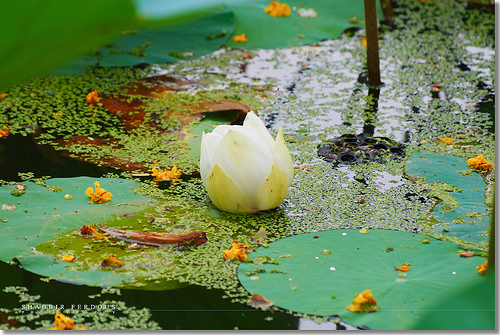


Barisal division is in the south west part of Bangladesh, has an area of 13297 sq. km and a population of 8.11 million. There are 6 districts and 22 municipalities under Barisal. It is a revering area. Barishal is a Division of rivers and canals. It is also famous for gardens of coconut trees. You will find thousands of coconut trees throughout Barishal Division. Kuakata is the main tourist spot in the division. In Barishal town you can visit Durga Sagor - a beautiful Dighi where lot of guest birds comes every winter season. This is also a beautiful park where you can spend your leisure time by roaming around the park and watching the birds.
Main Tourist Spots in Barishal Division :
:: Kuakata
Kuakata, locally known as Sagar Kannya (Daughter of the Sea) is a rare scenic beauty spot on the southernmost tip of Bangladesh. Kuakata in Latachapli union under Kalapara Police Station of Patuakhali district is about 30 km in length and 6 km in breadth. It is 70 km from Patuakhali district headquarters and 320 km from Dhaka.
Kuakata is one of the rarest places, which has the unique beauty of offering the full view of the rising and setting of crimson sun in the water of the Bay of Bengal in a calm environment. That perhaps makes Kuakata one of the world's unique beaches. The long and wide beach at Kuakata has a typical natural setting. This sandy beach has gentle slopes into the Bay of Bengal and bathing there is as pleasant as is walking or diving.
Means of Communication: There exists road communication between Dhaka and Patuakhali district headquarters. Accessible by road, water or air transport up to Barisal. Then one may travel by road or water to Kuakata or Patuakhali. From Dhaka you can go to Patuakhali by bus & from there by microbus to Kuakata. It is advisable to go Patuakhali by launch, which is an overnight journey, and you can enjoy the unique beauty of Bangladesh Rivers at nighttime during this journey. Instead of Potuakhali you can go to Khepupara by launch, which is also an overnight journey and from Khepupara you can go to Kuakata by microbus. A direct BRTC bus service is also available from Dhaka to Kuakata that leaves from Sayedabad Bus terminal at night takes 12 hours to reach Kuakata. But it might be a hectic bus journey as a number of ferries are there on the way to Kuakata by road. BRTC has introduced direct bus service from Dhaka to Kuakata via Barisal.
Where to stay: There are some hotel and motels in Kuakata where you can stay, but Holiday Homes is the best place to stay in Kuakata. It is a motel of Bangladesh Parjatan Corporation and its better if you confirm your booking from Dhaka in advance.
Horinghata is a place where you can see deer roaming around. In Horinghata forest sometimes the Royal Bengal Tiger is seen. Horin is a Bengali word for deer. So name itself express why it's called Horinghata. You can go to Horinghata from Borguna District.
